tipslogo2c

Janet Wilhelm

South Africa is in a unique position to benefit from the transition to a greener development path, particularly owing to the country's abundance in renewable resources (solar and wind predominantly). Accordingly, the country has demonstrated an increasing commitment to sustainable development, notably in the field of renewable energy.

Recognising the importance of effective economic regulation for the sustainable growth and development of South Africa, the Economic Development Department (EDD) commissioned the Centre for Competition, Regulation and Economic Development (CCRED) at the University of Johannesburg (UJ) to undertake a Regulatory Entities' Capacity Building Project. The project involves a review of the orientation and performance of various economic regulators, the identification of the constraints impacting their performance and the design and implementation of a knowledge capacity development programme in response to identified needs.

Renewable energy is one of the key sectors identified for the project. This seminar aims to share the findings of the review carried out by TIPS and stimulate dialogue and discussions on the renewable energy regulatory framework in South Africa. Discussions will notably explore issues related to the role of renewable energy in the Integrated Resource Plan and the Integrated Energy Plan, the key aspects for designing a successful renewable energy procurement programme and the experience of independent power producers in the South African context.

Introduction to Economy-Wide Policy Impact Analysis  

Workshop, 24-28 March 2014, Pretoria

Most economics curricula deal with macroeconomic tools for studying the economy as a whole and microeconomic tools for studying the behaviour of individual agents or markets. However, practical public and private sector economic analysts often need to focus on the industry/sector or meso-level of economic activity. Key sector analysis, sectoral impact studies, partial and general equilibrium trade and industry analysis are frequently conducted in both the public and the private sector.

Input-Output (IO), Supply-Use Table (SUT) and Social Accounting Matrix (SAM) analyses are often used as tools for such meso-level economic enquiry. Researchers use these tools to analyse the impact of policy-related and other changes on the economy. They can also be extended to address broader concerns, such as the impact of policy on the environment or on energy requirements. Economic modelling techniques that capture economy-wide impacts of policy changes are increasingly being used in academic, consulting, research and policy environments in Southern Africa and elsewhere.

To cater for the rising demand for these techniques, TIPS started offering an introductory workshop in economy-wide policy impact analysis in 2001. We are pleased to announce that the eleventh offering of this popular workshop will be held in Pretoria from 24-28 March, 2014.

The experience TIPS has had presenting these workshops for more than a decade has shown how important it is to understand not only the techniques of economy-wide analysis, but also the nature of the inter-industry data used to apply them to actual economies. The Workshop therefore begins with an examination of these basic data and how they can be integrated consistently with other data to given a picture of the whole economy. It then develops more and more sophisticated techniques that can be applied to a wide range of issues. These issues will include employment; energy; regional interactions; cost push price effects; the consequences of bottlenecks; income distribution; and how the structure of the economy impacts on these issues.

The workshop is presented by academics and experts in the field of economy-wide policy modelling. Lectures introduce the theory and provide insight into the scope of research possible using a particular modelling technique. Each lecture is followed by hands-on exercises applying the theory or model to relevant policy issues using economic data from South Africa and other Southern African countries. Apart from imparting the practical skills needed to apply the theory, these exercises familiarise participants with key features of economies studied. Participants also present brief group projects using the modelling tools learnt during the workshop. The models are all applied using Microsoft Excel.

By the end of the workshop, participants will be equipped with sufficient theoretical and practical skills to engage in linear economy-wide impact analysis. The workshop also provides a useful basis for process managers who have to digest such analysis, even though they may not undertake it themselves while it offers a solid grounding for those who wish to enter into the field of computable general equilibrium (CGE) modelling. For these participants, a CGE modelling workshop will be offered at a later stage.

Workshop fees (including light lunch): R11 500 (excluding VAT) and US$1 500 for participants from Developed Countries. To ensure that the workshop is pitched at the correct level, we invite interested participants to complete the attached form and return it to denves@xtra.co.nz.

The maximum number of students is 20. Note that TIPS will not make refunds after the payment due date unless the workshop is cancelled. TIPS' invoice documentation (tax clearance, bank clearance, etc) will only be sent on request by registered post. It is therefore important to make sure that TIPS is on your organisation's list of preferred suppliers and to factor-in sufficient time for these processes.

Suggested Reading List

1.   Miller, R. and Blair, P. (2009) Input-output analysis: Foundations and extensions, Cambridge University Press, Second Edition, http://www.cambridge.org/catalogue/catalogue.asp?isbn=9780521517133

Chapter 2: Foundations of Input Output Analysis

Chapter 4: Organisation of Basic Data for Input-Output Models

Chapter 5: The Commodity –by-Industry Approach in Input-Output Models

Chapter 6: Multipliers in the Input-Output Model

Chapter 9: Energy Input-Output Analysis

Chapter 10: Environmental Input-Output Analysis

Chapter 11: Social Accounting Matrices

Chapter 13, Section 2: Mixed Models

2.   Round, J.I. (2003) Social Accounting Matrices and SAM-based Multiplier Analysis, pp. 301-324 in eds. François Bourguignon and Luiz A. Pereira da Silva. The Impact of Economic Policies on Poverty and Income Distribution: Evaluation echniques and Tools. World Bank and Oxford University Press, Washington, D.C. and New York,

http://www.un.org/esa/policy/sanjose_training_mdgs/round_2003_sams_chapter14.pdf.

3.   United Nations. (1999) Handbook of Input-Output Table Compilation and Analysis, Studies in Methods, Handbook of National Accounting, Series F, No 74, Department of Economic and Social Affairs, Statistics Division,

http://unstats.un.org/unsd/publication/SeriesF/SeriesF_74E.pdf.

     Chapter II: The System of National Accounts (SNA) Framework of Supply and Use Tables (SUT): Overview

4.   Eurostat. (2008) Eurostat Manual of Supply, Use and Input-Output Tables

 http://epp.eurostat.ec.europa.eu/cache/ITY_OFFPUB/KS-RA-07-013/EN/KS-RA-07-013-EN.PDF

Section 1: Supply and Use Tables as an Integral Part of the Compilation of National Accounts

Section 2: The Supply Table

Section 3: The Use Table

5.   IFPRI, (2010) Social Accounting Matrices and Multiplier Analysis, an Introduction with Exercises, IFPRI Food Security in Practice series, http://www.ifpri.org/publication/social-accounting-matrices-and-multiplier-analysis.

 

The adoption of the Millennium Declaration in 2000 by all Member States of the United Nations was a defining moment for global development cooperation. In recognition of the need to translate this commitment into action, the Millennium Development Goals (MDGs) were adopted. The MDGs have defined a common framework of priorities for the development community.
 
In 2010, the UN General Assembly convened to review progress on the MDG targets and agreed on a concrete action plan to accelerate progress towards their full achievement by 2015. It also called on the UN System to lead the international discussion on post-2015 development agenda. In 2012, the UN Secretary General established a 26-member High-Level Panel of Eminent Persons to prepare a “bold yet practical development vision” for the Post-2015 development agenda with “shared responsibilities for all countries and with the fight against poverty and sustainable development at its core.”
 
The development dialogue seminar will focus on the outcomes of the post-2015 consultation processes that have now taken place at regional and national levels in Africa, and how the results of these consultation processes can guide future government policies and spending on social and economic development. The seminar will discuss the understanding of development priorities from perspectives of a range of state and non-state actors in Africa on the unfinished MDG agenda, new and neglected issues, and thinking on post-2015 development goals.

About the speaker

Dr Babatunde Omilola is the Economic Advisor with the UNDP in South Africa. Previously, he served as the UNDP Regional Poverty Reduction Practice Leader for Eastern and Southern Africa. Prior to joining UNDP, he worked with the International Food Policy Research Institute and the Food and Agriculture Organization of the United Nations. He has served as an Economic Advisor to many African governments and institutions. He holds both MPhil and DPhil degrees with specialty in Development Economics from the Institute of Development Studies, University of Sussex.

14 December 2013

Economic Regulation

Review of the regulation in the ports, electricity supply industry and renewable industry –

Project: Regulatory Entities Capacity Building: Review of Regulators Orientation and Performance

Client: Centre for Competition, Regulation and Economic Development, University of Johannesburg

Duration: 2013-2014 - to be completed by March 2014

Effective performance by economic regulators is important for growth and development. In recognition of the importance of their role, the Economic Development Department has commissioned the Centre for Competition, Regulation and Economic Development to undertake a research and capacity building project for economic regulators in South Africa. The Regulatory Entities Capacity Building Project involves a review of the performance of the economic regulators as well as identifying the constraints impacting their performance. The University of Johannesburg aims to use the information from the reviews to create customised training course in regulatory economics for both employees of the economic regulators in South Africa and for students.

TIPS is undertaking reviews of the following sectors as part of the project:

The emphasis of these reviews on understanding the issues at a practical level, looking at how the regulator has been able to address the challenges it has faced, and how it can be assisted to improve, including from learning from other regulators.

Review of Regulation in the Ports Section

Review of Regulation in the Electricity Supply Industry

Review of Regulation in Renewable Energy 


Ports

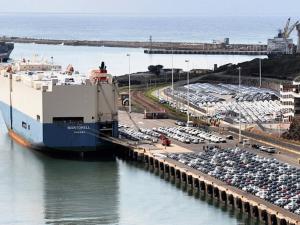
The South African Ports Regulator, established in terms of the National Ports Act 12 of 2005 is a relatively new institution. Time taken to establish the institution has meant it has only recently begun to be effective. Over the past three years it has flexed its regulatory muscle with significant revisions to the tariff book and pricing proposed by the National Ports Authority. Studies have been conducted on the tariff adjustments and the stakeholder submissions to the Ports Regulator. However, limited work has been done on the effectiveness of the regulator.
TIPS’s assessment the regulation of ports in South Africa includes:

  • Reviewing the role of the regulator, linking this to the broad policy framework and economic development priorities of the government.
  • Assessing the work of the regulator, including through looking at case studies of ports regulation in other jurisdictions.
  • Considering the role of the regulator in contributing to the efficient and cost-effective operation of the ports, including the impact of the ports on the broader economy.
  • Considering the role of ports in attracting investment and supporting the growth of service sectors related to port operations such as ship repair, boat building and servicing the offshore oil and gas sector.
  • Considering the regulator looking at more than pricing, and going broader into the terms of access and quality of service of South African ports.
  • Looking at international experiences in Australia, India and South America.

Resources

Review of Regulation in the Ports Section


Electricity Sector

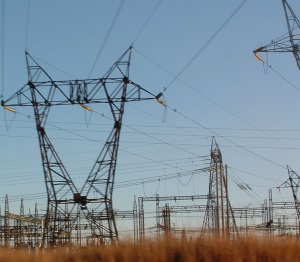
The National Energy Regulator of South Africa (NERSA) is the regulatory authority established in terms of the National Energy Regulator Act, 2004. 

The Regulatory Entities Capacity Building project will provide a comprehensive review of the regulators' role, linked with the policy framework and powers.  

The review includes:

  • Examining the linkages with economic development in a number of areas including links with industrial policy.
  • Assessing the key issues at each level of the Electricity Supply Industry value chain.
  • Examining electricity pricing and the process of setting prices by NERSA.
  • Evaluating the regulatory and institutional framework.
  • Looking at the role of Independent Power Producers and municipalities.
  • Undertaking case studies that highlight how actions by Eskom and the regulator have implications for industrial policy.
  • Identifying specific areas of capacity building to inform short learning programmes (SLPs).

Resources

Review of Regulation in the Electricity Supply Industry


Renewable Energy Sector

The Renewable Energy Independent Power Producer Programme (REIPPP) was established to encourage new entry into the market.

The Regulatory Entities Capacity Building project review of the renewable energy sector includes:

  • Assessing the problems and difficulties in implementing South Africa's first option for the expansion of renewable energy through feed-in tariffs (REFITs), initiated by the Department of Energy, and its abandonment by the government.
  • Assessing, with the assistance of the National Treasury's Public-Private Partnership Unit, the motivations for opting to pursue competitive bids tenders through the REIPPP instead of the REFIT system.
  • Assessing the outcomes of the competitive bidding process as a regulatory mechanism with reference to its impact on market entry, expansion of capacity, investment, pricing and linkages to industrial policy and job creation.
  • Explore NESRA's role in this process.

Resources

Review of Regulation in Renewable Energy 

There is growing concern that measures already in place or potentially adopted by developed countries to combat climate change could be trade distortionary, introduce new forms of 'green protectionism' and/or be discriminatory. Such policy and regulatory measures may range from emissions trading schemes (e.g. the EU's deferred airlines tax) to border tax adjustments that price carbon, subsidies, new public and/or private standards (including carbon labelling schemes), taxes on maritime transportation and, among other non-tariff barriers to trade, could entail the introduction of specific legislation.

Discussion bocussed on the following three questions from an industry/sector perspective:

• Using specific examples, is your industry/sector vulnerable to existing/new climate- or environment-related regulations/measures in international markets?
• Are any existing regulations/measures already impacting on your competitiveness, or would the latter be affected if these were to be introduced – and if so, how?
• What measures could your industry or sector take to reduce its carbon footprint?

For a summary of the roundtable discussion, see attachment below.

Project: Benefits of AGOA to South Africa

Client: Department of Trade and Industry (the dti)

Duration: 2012-2013

TIPS assisted the Department of Trade and Industry (the dti) to carry out a study into the benefits that have accrued to South Africa as a result of the African Growth and Opportunity Act (AGOA). The research is intended to inform the South African government’s position on AGOA as the 13-year old piece of US legislation enters the last two years of its existing phase. Initially set to expire in 2008, AGOA was extended to 2015 allowing Sub-Saharan African beneficiary countries, including South Africa, to continue to enjoy preferential access to the United States market. US President Barack Obama also recently pledged to revamp AGOA before its September 2015 expiry.

The research, which confirmed that AGOA has the potential to support export-driven jobs in South Africa, fills gaps in AGOA’s impact on specific South African commodity value chains: the agro-processing, textiles and apparel, and automotive sectors.

A joint workshop between TIPS and The South African Institute of International Affairs (SAIIA) on AGOA took place on 17 September, 2013. This was timed to coincide with the lobbying visit by a South African government and business delegation to Washington led by Trade and Industry Minister Rob Davies. The objective of the session was to present the TIPS research and to encourage debate among stakeholders on the future of AGOA. The event benefited from participation from the Department of Trade and Industry, the US Embassy in Pretoria and a range of business representatives.

For the workshop outcomes, presentations and articles on AGOA click here.

Summary articles – extracted from the research: 

The African Growth and Opportunity Act (AGOA) is a unilateral trade policy concession governing United States and sub-Saharan Africa trade and investment relations. AGOA enhances US market access for 40 Sub-Saharan African (SSA) countries, including South Africa. Signed into law by the US Congress in May 2000, AGOA has been renewed several times and is now set to expire in September 2015.

With the review of AGOA currently underway, this seminar, will bring together the region's foremost trade think tanks (i.e. South African Institute of International Affairs (SAIIA), TIPS and trade law centre (Tralac); industry leaders and key government officials, to discuss and engage the impact of AGOA and what this unilateral dispensation means for South Africa.  Specifically, the session will provide an overview of AGOA's policy successes and challenges and engage participants on AGOA's impact on South Africa's competitiveness, with specific focus on the citrus and automotive sectors.

ABOUT THE SPEAKER

José Gabriel Palma is currently a Senior Lecturer in the Faculty of Economics, Cambridge University. He has a D. Phil in Economics from Oxford University, a PHD from Cambridge University (by incorporation) and a D. Phil in Political Science from Sussex University.  He worked during the Government of Salvador Allende in the nationalisation of the copper industry, and after his graduate work in the UK he worked as a lecturer at the universities of London, Sussex, Oxford and Cambridge. He has published articles and books dealing with the economics of developing countries, with a strong focus on Latin America and Asia. He has also written extensively on inequality, financial liberalisation and financial crises, industrial policy, the history of ideas in development economics and politics, and Latin American economic history.

Document can be found at: http://www.econ.cam.ac.uk/dae/repec/cam/pdf/cwpe1111.pdf

20 August 2013

Research Networks

Green Economy Coalition

TIPS joined the Green Economy Coalition (GEC) in 2013.

The GEC is a diverse set of organisations and sectors including non-governmental organisations, research institutes, UN organisations, business and trade unions. Its vision is of a resilient economy that provides a better quality of life for all within the ecological limits of the planet. Its mission is to accelerate the transition to a new green economy.

The GEC is governed by a Steering Group which meets every month to discuss strategy and management, and is coordinated by a small secretariat based at the offices of the International Institute for Environment and Development.

www.greeneconomycoalition.org

Research Collaborative: Tracking Private Climate Finance

Tracking private climate finance flows, together with flows of public finance, is a key task in monitoring progress in the international effort to address climate change mitigation and adaptation. Yet, there are significant data, methodological and knowledge gaps on private climate finance flows, and available information is scattered across numerous different actors. Further research and better co-ordination of ongoing initiatives are therefore required to improve the identification, measurement, and reporting of private climate flows.

The Research Collaborative is an open network, co-ordinated and hosted by the OECD Secretariat, of interested governments, relevant research institutions and international finance institutions.

The goal is to partner and share best available data, expertise and information to advance policy-relevant research in a comprehensive and timely manner. The project is designed to serve as a co-ordinating platform for identifying research priorities and gaps, sharing information, weaving a coherent narrative across what would otherwise be disparate research outputs, as well as communicating results to raise awareness in this area.

TIPS is one of the participating institutions.

The others are: Bloomberg New Energy Finance, Climate Policy Initiative, Gaia, Overseas Development Institute, OECD, United Nations Environment Programme, World Resources Institute and Zambia Institute of Environmental Management.

Project website: www.oecd.org/env/researchcollaborative

Summary leaflet of the programme available here: Research Collaborative on Tracking Private Climate Finance


Susan Newman currently holds the position of lecturer in international economics at the International Institute of Social Studies, Erasmus University of Rotterdam. Her main research interests include the political economy of post-apartheid industrial development in South Africa, the relationship between financial and physical markets for commodities, and the relationship between finance and the restructuring of production. She holds a visiting position at the University of the Witwatersrand and has contributed to industrial policy research for the South African Department of Trade and Industry and the Gauteng Department of Economic Development.

Samantha Ashman is currently a Post- Doctoral Research Fellow at the University of Johannesburg. She is also a Visiting Senior Research Fellow at the University of the Witwatersrand. Her research interests include the financialization of the global economy and its implications; the relationship between real and financial accumulation; the evolution of South Africa's Minerals Energy Complex; and Industrial Policy.

Page 132 of 160